By Fred Itua
You got the degree. You did your NYSC. You took the courses, built the CV, applied to hundreds of roles. You wrote cover letters at midnight. You refreshed your email every morning.
And nothing came.
This is not a personal failure story. This is a systems story. And it is playing out in millions of Nigerian households right now.
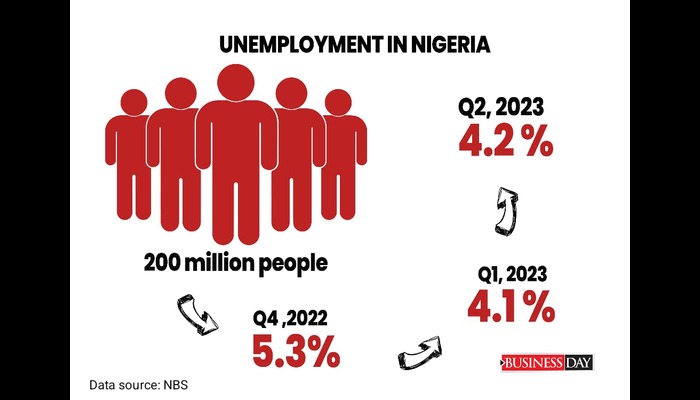
The numbers are bleak, and they’re being hidden. Nigeria’s National Bureau of Statistics revised its unemployment methodology in recent years, producing a headline figure that sounds manageable. But experts note that the old methodology put youth unemployment at 53.4%, figures analysts say are far closer to the reality on the ground than the current official numbers.
The ILO confirmed in 2025 that despite some national improvements, youth unemployment has risen to 6.5% under the new methodology, with women worse off than men, and that Nigeria’s labour market continues to grapple with a persistent skills mismatch where job seekers hold qualifications that do not match what employers want.
As the ILO put it directly: “Many graduates possess theoretical knowledge but lack practical industry-related competencies, resulting in overqualification, underqualification, and employment in unrelated fields.”
A graduate riding a tricycle to survive. A master’s degree holder behind a POS machine. Not lazy. Not unambitious. Just failed by a system that trained them for jobs that do not exist.
The stress of repeated rejections, uncertainty about the future, and pressure to meet personal and family expectations can trigger anxiety, low self-esteem, and even depression among Nigerian job seekers.
Most unemployed Nigerian youths between 18 and 35 face precarious daily challenges that erode their confidence and mental health, and the desperation that comes with prolonged joblessness creates fertile ground for restiveness, fraud, and other social problems.
What the statistics don’t capture is quieter: the shame of going back to your parents’ house at 28. The exhaustion of performing optimism for family members who keep asking “so what happened with that job?” The slow erosion of believing you are worth anything at all.
Six in ten Nigerian youth, 60%, say they have considered emigrating, mostly to find jobs or escape economic hardship. The share who say they have given “a lot” of thought to leaving has tripled since 2017, from 12% to 37%.
This is the Japa generation. Not people abandoning their country out of disloyalty, but people who have run out of reasons to stay. High unemployment, worsening insecurity, eroding purchasing power, poor healthcare, and a failing educational system are among the forces pushing skilled Nigerians out.
Every doctor that leaves is a potential life-saver lost. Every teacher that relocates is a generation of students deprived. Every engineer or innovator that exits is a missed opportunity for growth.
Nigeria’s population is expanding at roughly 2.6% annually, meaning over 4 million new people enter the labour force every year. The economy is not creating jobs at anywhere near that pace. The gap between new entrants and available positions widens each year.
The educational system continues to produce graduates without the skills employers need. Insider hiring networks lock out new talent.
Corruption channels opportunities to those already connected. And the professionals most capable of fixing these problems are the ones most likely to have already left.
On the ground, graduates are becoming tricycle operators and POS agents, not from lack of ambition, but from lack of options.
It looks like a 27-year-old with a second-class upper degree applying for the same entry-level role for the third year in a row.
It looks like someone turning down a job offer that pays less than their transport fare to the office.
It looks like a LinkedIn profile last updated in hope, now left untouched in resignation.
The question Nigeria has to answer urgently is not just “how do we create more jobs?” It is “how do we rebuild the trust of a generation that has largely stopped believing the system works for them?”
Because 91% of young Nigerians already say the country is going in the wrong direction. That is not apathy. That is a verdict.