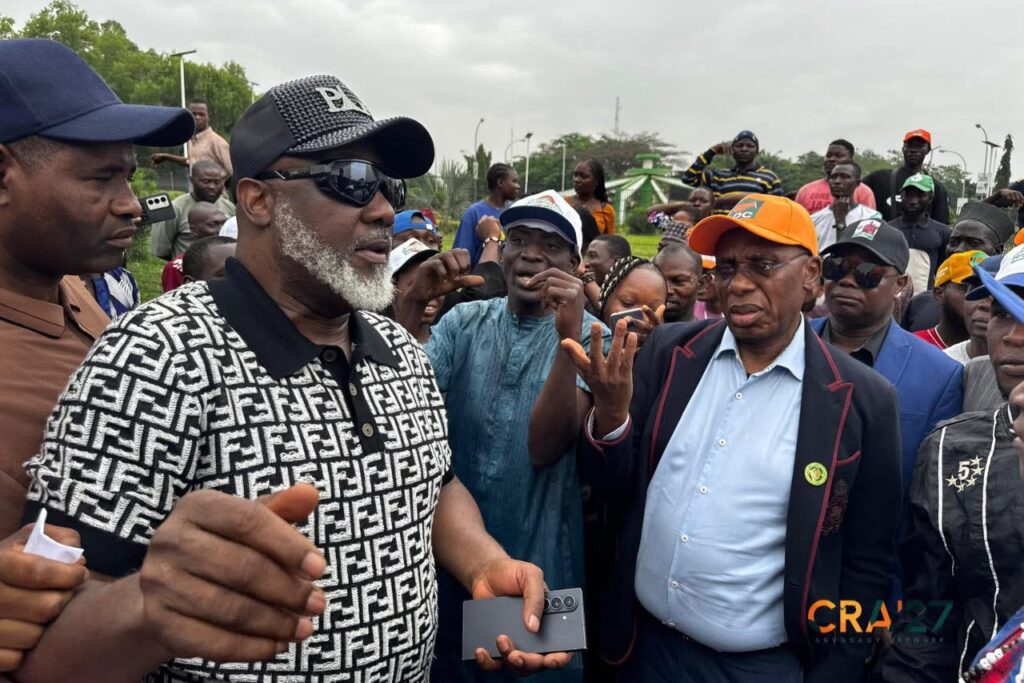
Leaders of the Peoples Democratic Party (PDP) and that of the African Democratic Congress (ADC), on Wednesday, held a crucial meeting in Abuja.
The meeting, held at the residence of David Mark, the ADC National Chairman had the presence of PDP leaders; governor of Oyo state, Seyi Makinde, former governor of Niger state, Babangida Aliyu, PDP National Chairman, Tanimu Turaki, Jerry Gana, PDP National Secretary, Taofeeq Arapaja, PDP National Publicity Secretary, Ini Ememobong and other members of the party National Working Committee (NWC).
From the camp of the ADC are; Atiku Abubakar, Peter Obi, Rabiu Musa Kwankwaso, Rotimi Amaechi, former Minister of Justice, Abubakar Malami, Aminu Tambuwal (Sokoto), ADC National Publicity Secretary, Bolaji Abdullahi and others.
The meeting could be described as re-alignment ahead of the 2027 general election and also to counter the move by the All Progressives Congress (APC) and the Independent National Electoral Commission (INEC) to frustrate the opposition parties in the 2027 elections.
The political battle has since expanded beyond Nigeria’s borders. Both the APC under President Tinubu and the opposition coalition centred around Atiku Abubakar and the ADC are now actively courting foreign policymakers, international media, and the Nigerian diaspora, each trying to define Nigeria’s narrative ahead of the 2027 vote.
The federal government has committed up to $9 million to lobbying efforts in the United States, while Atiku has signed a $1.2 million contract to build his own access and influence in Washington.
Back home, opposition parties have begun considering a boycott of the 2027 general elections, citing alleged bias by INEC and what they described as attempts to clear the political space for President Tinubu to run unchallenged.
The PDP’s Ini Ememobong warned that INEC’s planned activities, such as the clean-up of the voter register and monitoring of party records, could potentially be used to deregister opposition parties, saying “the only thing that can be gleaned from INEC’s disposition is that it wants to foist a coronation, an uncontested election in 2027.”
The ADC, for its part, has pushed back strongly against the ruling party. ADC National Publicity Secretary Bolaji Abdullahi accused the APC-led federal government of deliberately dismantling every other political party to ensure Tinubu remains the sole candidate in 2027, drawing a parallel with General Sani Abacha’s creation of five parties all fielding him as their sole presidential candidate.
A major blow to the opposition’s platform came when INEC derecognised the David Mark-led National Working Committee of the ADC, throwing the party into a leadership crisis that has complicated plans for several politicians hoping to use it as a launchpad.
Bauchi Governor Bala Mohammed, for instance, who had decided to quit the PDP, was expected to join the ADC but paused his move following INEC’s de-recognition of the Mark-led executive.
The APC has dismissed opposition complaints. An APC chieftain in Osun, Olatunbosun Oyintiloye, said President Tinubu “is a true democrat and does not need to destabilise any party to secure re-election in 2027,” urging opposition leaders to stop blaming the President for their internal crises.
Meanwhile, political realignments are accelerating, with governors including Sheriff Oborevwori of Delta State, Umo Eno of Akwa Ibom, Douye Diri of Bayelsa, Peter Mbah of Enugu, and Caleb Mutfwang of Plateau all switching structures from PDP to APC, further thinning the opposition’s base ahead of what promises to be a fiercely contested election.